🪐 How to Find Planets in the Night Sky
🌌 What It Is
Planets are celestial bodies that orbit a star and are massive enough to be rounded by their own gravity. Our solar system contains eight major planets, which are divided into two categories: terrestrial and gas giants. Terrestrial planets, like Earth, have solid rocky surfaces, while gas giants are made mostly of gases and lack a true solid surface.
In this article, you'll learn how to locate the planets visible from Earth using just your eyes and a little patience. We'll explore how each planet looks in the night sky and discuss the factors that influence their visibility.
By understanding how planets move across the sky, you’ll gain the skills needed to identify them throughout the year. Discovering planets is not only exciting but can also deepen your appreciation for the vastness of our solar system.
📍 Where It Is and How Far Away
The planets in our solar system orbit around the Sun. Inner planets like Mercury and Venus orbit closer to the Sun, while outer planets like Jupiter and Saturn are much farther away. For instance, Venus is about 0.7 astronomical units (AU) from the Sun, with 1 AU being the average distance from Earth to the Sun.
Understanding the distances involved in observing planets is crucial. Mars is roughly 1.5 AU from the Sun, which makes it significantly easier to spot compared to Neptune, which sits about 30 AU away. These vast distances impact how bright planets appear in our night sky.
The farther a planet is from the Sun, the less sunlight it receives, affecting its temperature. For example, the icy surface of Neptune is incredibly cold because of its great distance from the Sun.
🧱 Size, Mass, and Gravity (Made Simple)
Planets come in a variety of sizes and masses. Jupiter, the largest planet in our solar system, has a mass over 300 times that of Earth and a surface gravity that is 2.5 times stronger. This means if you stood on a solid surface with similar gravity, you would feel much heavier.
Mercury, by contrast, is the smallest planet and has much weaker gravity, meaning you would feel lighter there. Interestingly, gas giants like Jupiter and Saturn don't have a solid surface to stand on. Due to their thick gaseous layers, describing their gravity can get complex.
The size and mass of a planet also influence its gravitational pull, which affects nearby moons and rings, leading to fascinating dynamics in their orbits.
🌡️ Atmosphere and Weather
The atmosphere of a planet is made up of the gases surrounding it. Earth’s atmosphere is rich in oxygen and nitrogen, supporting life. In contrast, Jupiter’s atmosphere consists largely of hydrogen and helium, with powerful storms like the Great Red Spot.
Weather patterns on planets are shaped by their atmospheres. On Venus, for example, a dense carbon dioxide atmosphere traps heat, resulting in extreme surface temperatures. The rapid rotation of Jupiter drives its strong, swirling winds and colossal storms.
Atmospheric conditions relate to a planet’s distance from the Sun and its own chemical makeup, producing a diverse range of environments across our solar system.
🪨 Surface and Interior
For rocky planets like Mars, the surface is characterized by features such as craters, volcanoes, and valleys. These features are primarily shaped by volcanic activity and meteor impacts. Mars’ reddish hue is due to iron oxide or rust, coating its surface.
Gas giants like Saturn, lacking a solid surface, are composed of layers of gases compressed into semi-solids as you move deeper. These planets have a core of rock or metal, surrounded by thick, turbulent atmospheres.
The interior structure of planets provides insights into their history and geologic activity. Understanding these features helps scientists determine the potential for hosting life.
🌀 Rotation, Orbit, and Seasons
The rotation period of a planet determines the length of its day. Earth takes 24 hours to complete one rotation, while Jupiter rotates much faster, in just 10 hours. A planet’s orbit around the Sun defines its year, with Earth taking 365 days to orbit once.
Planets have different axial tilts, affecting their seasons. Earth’s moderate tilt leads to the familiar four seasons. On Uranus, however, an extreme tilt causes lengthy, severe seasons, with one pole facing sunlight for half of its 84-year orbit.
Some planets, like Venus, rotate in the opposite direction compared to their orbit—a condition known as retrograde rotation, which influences their day-night cycle.
🧲 Magnetic Field and Radiation
A magnetic field is a protective bubble that shields a planet from solar and cosmic radiation. Earth’s magnetic field is strong and creates phenomena such as the auroras, which occur when charged particles from the Sun interact with our atmosphere.
Jupiter has the strongest magnetic field among the planets, which traps charged particles creating intense radiation belts. These radiation levels pose challenges for spacecraft and any potential exploration missions.
The presence of a magnetic field plays a crucial role in protecting a planet’s atmosphere from being eroded by solar winds, influencing its habitability.
🌙 Moons, Rings, and Neighbors
Planets often have moons, which are natural satellites. Jupiter, for example, has over 75 known moons, including the largest moon in the solar system, Ganymede. Moons can experience tidal effects due to gravitational interactions with their parent planet.
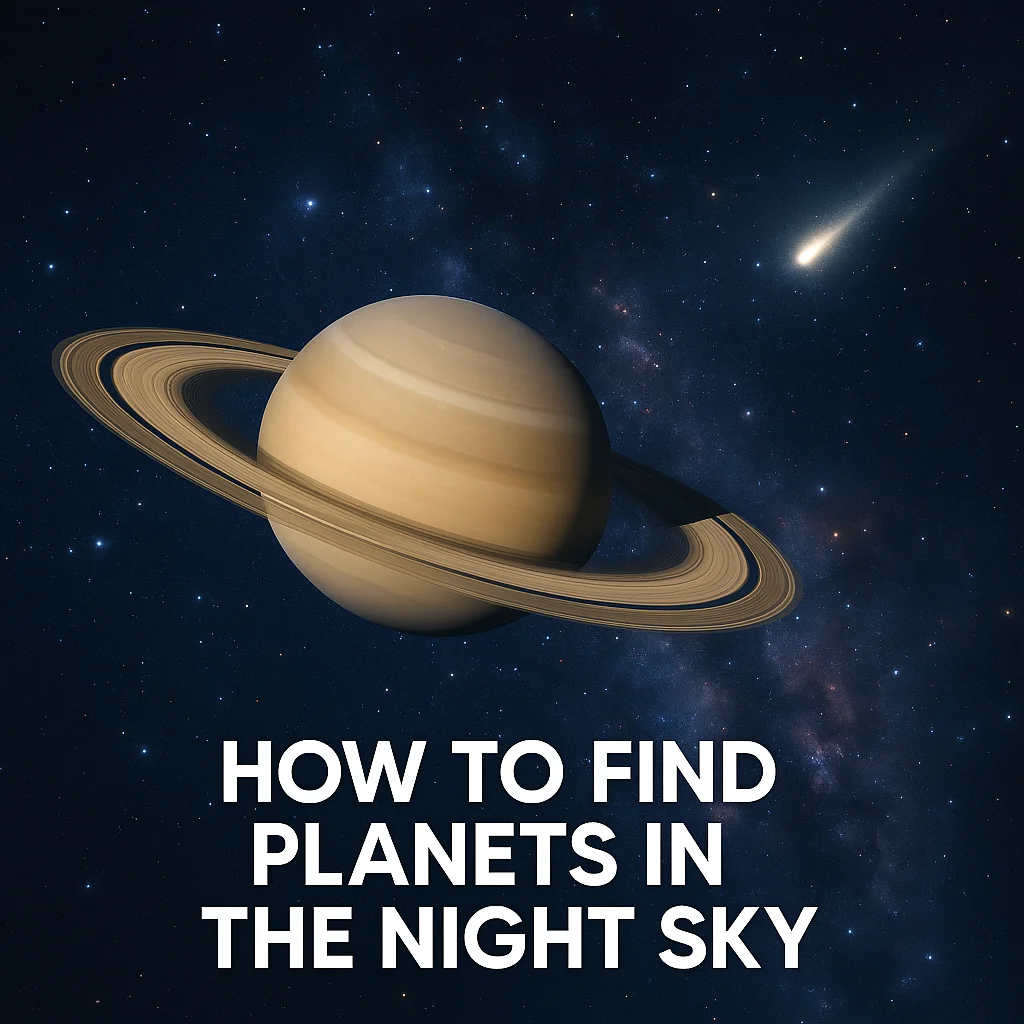
Saturn is famous for its stunning ring system, composed of ice and rock particles. These rings are visible from Earth with a telescope, enchanting observers with their beauty.
Some planets, like Mercury and Venus, have no moons, which is relatively rare and fascinates scientists studying planetary formation.
🔭 How We Know (Missions and Observations)
Telescopes allow us to observe planets from Earth, providing images and data about their atmospheres and surfaces. These observations help us track their positions and predict their visibility in the night sky.
Spacecraft missions have been crucial in studying planets in greater detail. For instance, the Voyager probes provided unprecedented data on the outer planets, while recent missions like Juno continue to explore Jupiter.
By analyzing data such as images, spectra, and magnetic readings, scientists piece together a comprehensive understanding of each planet's characteristics and behavior.
❓ Common Questions and Misconceptions
Is it a star? No, planets shine by reflecting sunlight, unlike stars which produce their own light through nuclear fusion.
Can you stand on it? Only rocky planets like Earth and Mars have solid surfaces where you can stand. Gas giants like Jupiter don’t have solid ground.
Is it habitable? Most planets in our solar system lack the conditions necessary for life as we know it, primarily due to extreme temperatures and inhospitable environments.
Why is it that color? A planet's color is influenced by its atmosphere and surface materials. Mars looks red due to iron oxide, while Neptune appears blue because of methane in its atmosphere.
📌 Summary
- The planets orbit the Sun and come in various types: terrestrial and gas giants.
- Distinct positions in the Solar System affect visibility and surface conditions.
- Size and gravity vary widely among planets, influencing surface experience.
- Planetary atmospheres determine weather patterns and climate.
- Surfaces can be rocky or gaseous, with features shaped by environmental forces.
- Rotational dynamics affect day length and seasonal changes.
- Magnetic fields protect planets and influence space weather effects.
- Moons and rings add complexity through gravitational interactions.
- Telescopes and spacecraft gather essential data about planets.
- Each planet offers unique features and mysteries, captivating observers.