🪐 Why Planets Stay in Orbit
🌌 What It Is
Planets are large celestial bodies that orbit a star and are massive enough to be rounded by their own gravity. In our Solar System, each planet moves around the Sun in a set pathway called an orbit. As they travel around the Sun, planets do not collide with each other due to the vast distances between them and the influence of gravity, which orchestrates their movements in space.
Planets come in different types, such as terrestrial planets like Earth, which have solid rocky surfaces, and gas giants like Jupiter, which are enormous and composed mostly of gases. This article will explore what keeps planets locked into their predictable paths and what factors influence their orbits.
The reader will learn about the key forces at play—namely gravitational forces—and how these, along with inertia, ensure the planets remain in stable orbits. This fundamental understanding ties together the concepts that underpin much of astronomy and space exploration.
📍 Where It Is and How Far Away
In our Solar System, planets are distributed at varying distances from the Sun. For instance, Mercury, the closest planet, orbits at only about 36 million miles away from the Sun. On the other end of the spectrum, Neptune, the farthest recognized planet, is about 2.8 billion miles from the Sun. These distances are often expressed in astronomical units (AU), where 1 AU equals the distance from Earth to the Sun.
The position of a planet in the Solar System affects its environment significantly. Planets closer to the Sun receive more sunlight and tend to be hotter, while those further away get less sunlight and have colder temperatures. These factors contribute to diverse planetary climates, including atmosphere and surface conditions.
Beyond the fundamental distances, scientists also consider how the solar energy received by a planet influences its atmosphere and potential for hosting life. Planets that fall within the habitable zone, like Earth, have conditions that could potentially support life due to moderate temperatures and the presence of liquid water.
🧱 Size, Mass, and Gravity (Made Simple)
Planetary size and mass play crucial roles in defining the gravitational pull a planet can exert. For example, Jupiter is the largest and most massive planet in our Solar System. As a result, it has a strong gravitational influence, not only affecting its own orbit but also those of its many moons and nearby asteroids.
Gravity, the force that attracts two bodies toward one another, depends on both the mass of the objects and the distance between them. On a planet, gravity determines whether a person feels light or heavy. Earth’s gravity is what we normally experience; for instance, the gravity on Jupiter's surface is significantly stronger, meaning a person would weigh over two times what they weigh on Earth.
Additionally, for those planets without a solid surface, like gas giants, the concept of standing becomes abstract, as there is no tangible surface to stand on. Instead, scientists examine these planets through layers of atmosphere and deep clouds, studying their gravitational effects indirectly.
🌡️ Atmosphere and Weather
The atmosphere of a planet consists of gases that envelop it. Earth's atmosphere is primarily nitrogen and oxygen, whereas a planet like Venus has a thick, toxic atmosphere dominated by carbon dioxide with clouds of sulfuric acid. These differences in atmospheric composition lead to drastically different weather patterns.
Planets with atmospheres often have winds, storms, and other weather phenomena. For instance, Jupiter features the Great Red Spot, a colossal storm persisting for centuries. Such weather patterns arise from the planet's rapid rotation and the uneven solar energy distribution across its surface.
Temperature variations occur due to several factors, including a planet's distance from the Sun and the greenhouse effect, wherein gases trap solar heat. The atmospheres of gas giants are also characterized by complex cloud systems and rapid, patchy rotations, contributing to turbulent weather.
🪨 Surface and Interior
Terrestrial planets, like Mars and Venus, have solid surfaces marked by craters, volcanoes, and tectonic activity, shaping their landscapes over millions of years. The geographical features tell stories of past impacts and volcanic eruptions, providing clues about the planet's history and structure.
In contrast, gas giants like Saturn don't have solid surfaces. Instead, they possess thick layers of gas, with pressure and temperature increasing toward the center. Underneath the visible cloud layers lie fluids that gradually become denser, leading to cores of heavy elements.
Understanding a planet's surface and interior involves studying its geology and inferring the presence of layers through gravitational and magnetic data. These methods help scientists reconstruct the planetary processes that have taken place over eons.
🌀 Rotation, Orbit, and Seasons
The rotation of a planet defines the length of its day. For instance, Earth completes a full rotation in approximately 24 hours, as opposed to Jupiter, which rotates rapidly, completing a full spin in just about 10 hours. These rotations influence atmospheric dynamics and the length of daylight.
Planets also travel around the Sun in orbits. The time taken to complete one full orbit defines a year on that planet. Earth's year lasts about 365 days, while Neptune's year takes roughly 165 Earth years due to its vast distance from the Sun.
Axial tilt, the angle at which a planet spins relative to its orbit, determines its seasons. A planet like Uranus has an extreme tilt, almost on its side, leading to unusual seasonal patterns compared to more modest axial tilts like Earth's.
🧲 Magnetic Field and Radiation
A planet's magnetic field stems from movements within its core, creating a protective shield against solar wind—a stream of charged particles emitted by the Sun. Earth’s magnetic field, for example, forms the magnetosphere, which protects it from harmful solar radiation.
This magnetic field also causes phenomena like auroras, seen as spectacular displays of light near the polar regions. The interactions between the magnetosphere and solar particles result in colorful, dynamic sky patterns observed from Earth and other planets like Jupiter and Saturn.
For missions, understanding a planet's magnetosphere is crucial as it affects spacecraft electronics and communication systems. Some planets exhibit strong radiation belts, hazardous zones for spacecraft that must be navigated carefully.
🌙 Moons, Rings, and Neighbors
Many planets have natural satellites, or moons, orbiting them. These moons vary greatly in size and composition, ranging from Earth’s single Moon to the many moons of Jupiter, like the volcanic Io and ice-covered Europa. These relationships tell scientists a lot about gravitational interactions.
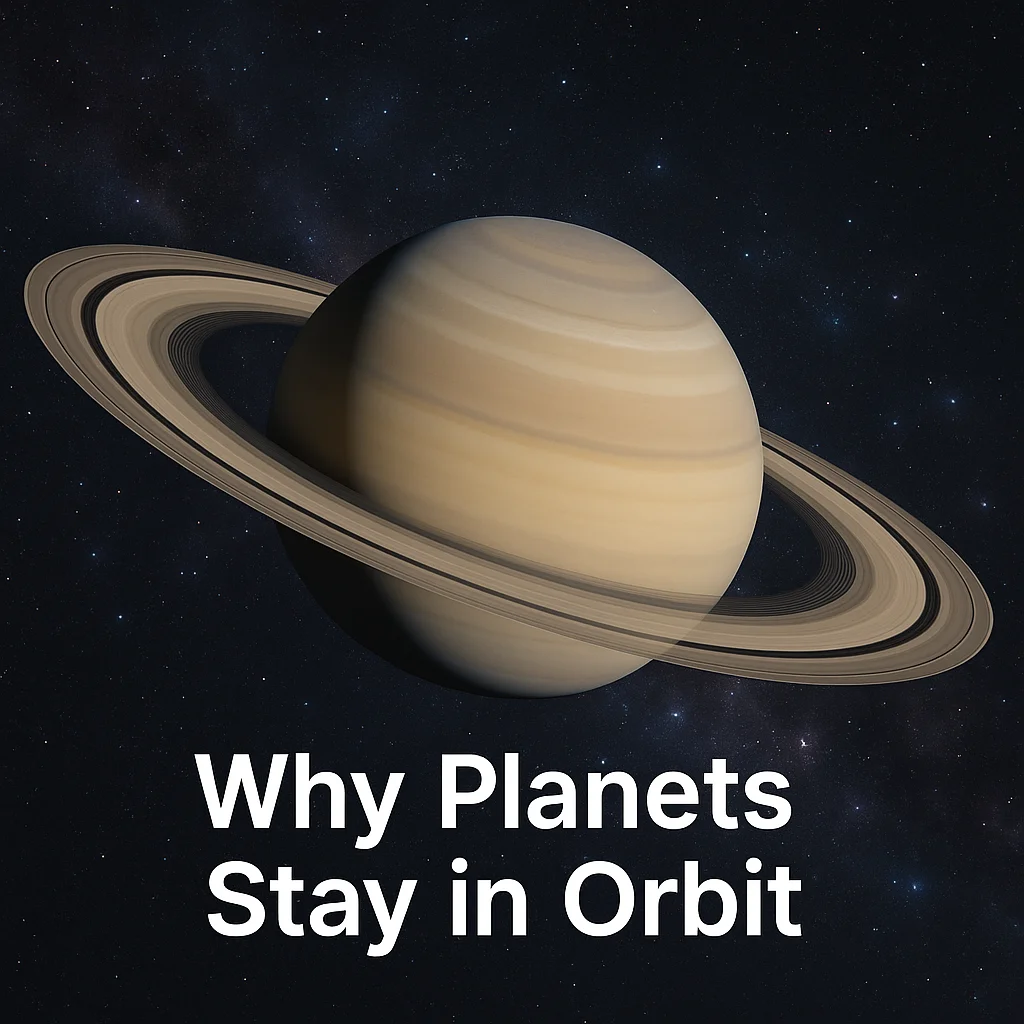
Rings are another fascinating feature found around planets like Saturn, which is famous for its stunning, wide ring system composed of countless small ice and rock particles. These rings are delicately balanced and maintained by gravitational forces, including those from nearby moons.
The dynamics of moons and rings involve complex gravitational interactions, such as tidal forces, which influence both the moons and their parent planet. Such interactions can even affect rotational speeds or cause phenomena like volcanic activity.
🔭 How We Know (Missions and Observations)
Our understanding of planets comes from observations using telescopes and data collected from spacecraft. Telescopes allow us to observe planets from Earth, providing valuable images and spectral data about their atmospheres and surfaces.
Space missions, such as NASA’s Voyager and the more recent Juno and Cassini probes, have travelled to other planets, delivering detailed, direct observations of their atmospheres, rings, and moons. These missions collect various types of data, including images, temperature readings, and magnetic field measurements.
Ground-breaking discoveries often arise from these missions, revealing new insights into the composition, processes, and histories of planetary bodies. Collaboration between telescopes and missions helps scientists piece together the vast puzzle of our Solar System.
❓ Common Questions and Misconceptions
One common question is, “Are all planets habitable?” In our Solar System, only Earth is in the habitable zone with conditions suitable for life as we know it.
Another misconception is, “Can you stand on Jupiter?” Jupiter lacks a solid surface, so standing on it isn't possible in the traditional sense.
People often wonder, “Is Mars red because it's hot?” Mars is red due to iron oxide (rust) in its soil, not because of its temperature.
“Why is Venus hotter than Mercury?” Despite being further, Venus's thick atmosphere traps heat effectively, making it hotter despite its greater distance from the Sun.
“Do all planets have magnetic fields?” Not all planets have magnetic fields; for example, Venus has a weak magnetic field as opposed to stronger ones on Jupiter and Earth.
Lastly, “Is Saturn the only planet with rings?” While Saturn's rings are the most prominent, other planets like Jupiter, Uranus, and Neptune also have ring systems.
📌 Summary
- Planets are large celestial bodies orbiting stars, held by gravity.
- They are situated at various distances from the Sun, affecting conditions.
- Mass and gravity are key in how heavy objects feel on each planet.
- Atmospheres vary from thick on Venus to none on the Moon.
- Terrestrial planets have solid surfaces, while giants are gaseous.
- Planets rotate and revolve, which dictates day lengths and years.
- Magnetic fields shield planets from harmful solar radiation.
- Moons and rings illustrate complex gravitational relationships.
- Knowledge comes from telescopic and spacecraft observations.
- Saturn is famous for its rings, and Jupiter has many moons.